Swimming vs Running Lung Capacity: Which Improves Lungs More?
When people compare swimming vs running lung capacity, the common question is: which one actually improves your lungs more?
Last year, I competed in a swimming competition and won one gold medal and one silver medal. Around that time, I had heard that running could actually help improve swimming performance. So I decided to take it seriously — and I’ve been running consistently for about a year now. This year, when I competed again, I won two gold medals.
From my experience, running helped me build stronger legs and improve my breathing while swimming. At the same time, swimming also improved my running — my breathing became more controlled, and unlike many runners who complain about back or spine discomfort, I didn’t experience those issues. Being a swimmer gave me a clear advantage.
In the end, I realized that swimming and running truly complement each other. They work together, not against each other — and both play a big role in improving lung capacity and overall performance. This is exactly why understanding swimming vs running lung capacity matters for athletes looking to maximize both sports.

How Swimming Affects Lung Capacity
Swimming places your breathing under constant control. Unlike running, you can’t breathe whenever you want — you must sync your breath with your stroke.
This leads to several key adaptations:
- Improved breath control
- Stronger respiratory muscles
- Better oxygen efficiency
- Increased tolerance to carbon dioxide
After a few weeks of swimming, you will realize that you won’t get out of breath easily even outside the pool. This is because swimming forces your body to use oxygen more efficiently, not just take in more air.
For a detailed comparison of swimmers’ lungs vs normal lungs, check this link: Swimmers Lungs vs Normal Lungs
How Running Affects Lung Capacity
Running, on the other hand, focuses more on continuous oxygen demand.
When you run regularly:
- Your heart pumps more efficiently
- Your VO₂ max improves (maximum oxygen usage)
- Your endurance increases
- Breathing becomes more automatic and rhythmic
If you are a runner, you will realize you can run longer without feeling tired, and you don’t have to control your breathing as swimmers do.
So while running may not train breath-holding, it significantly improves how your body uses oxygen over time.
Key Differences: Swimming vs Running
Here’s where the real comparison becomes clear:
| Aspect | Swimming | Running |
|---|---|---|
| Breath & Lung | Teaches breath control, builds lung strength, improves underwater tolerance, reduces breathing frequency | Trains sustained oxygen use, increases VO₂ max |
| Endurance | Low-impact full-body endurance | Improves cardiovascular endurance, easier to maintain consistently |
| Additional Benefits | Reduces stress on joints, strengthens upper body | Builds leg power, straightforward to track progress |
| Calorie Burn & Fat Loss | ~250–350 kcal per 30 min (depending on stroke and intensity) | ~300–400 kcal per 30 min (depending on speed) |
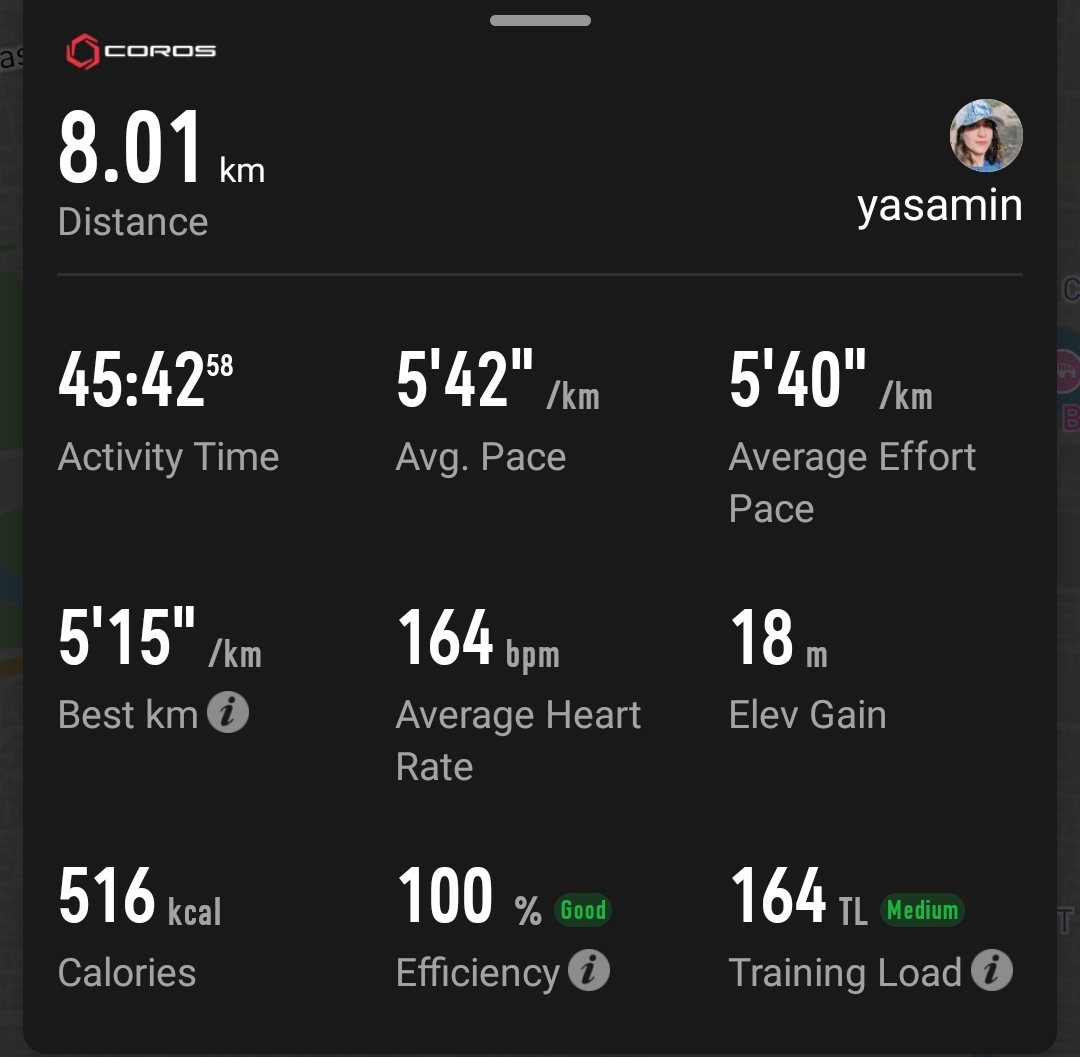
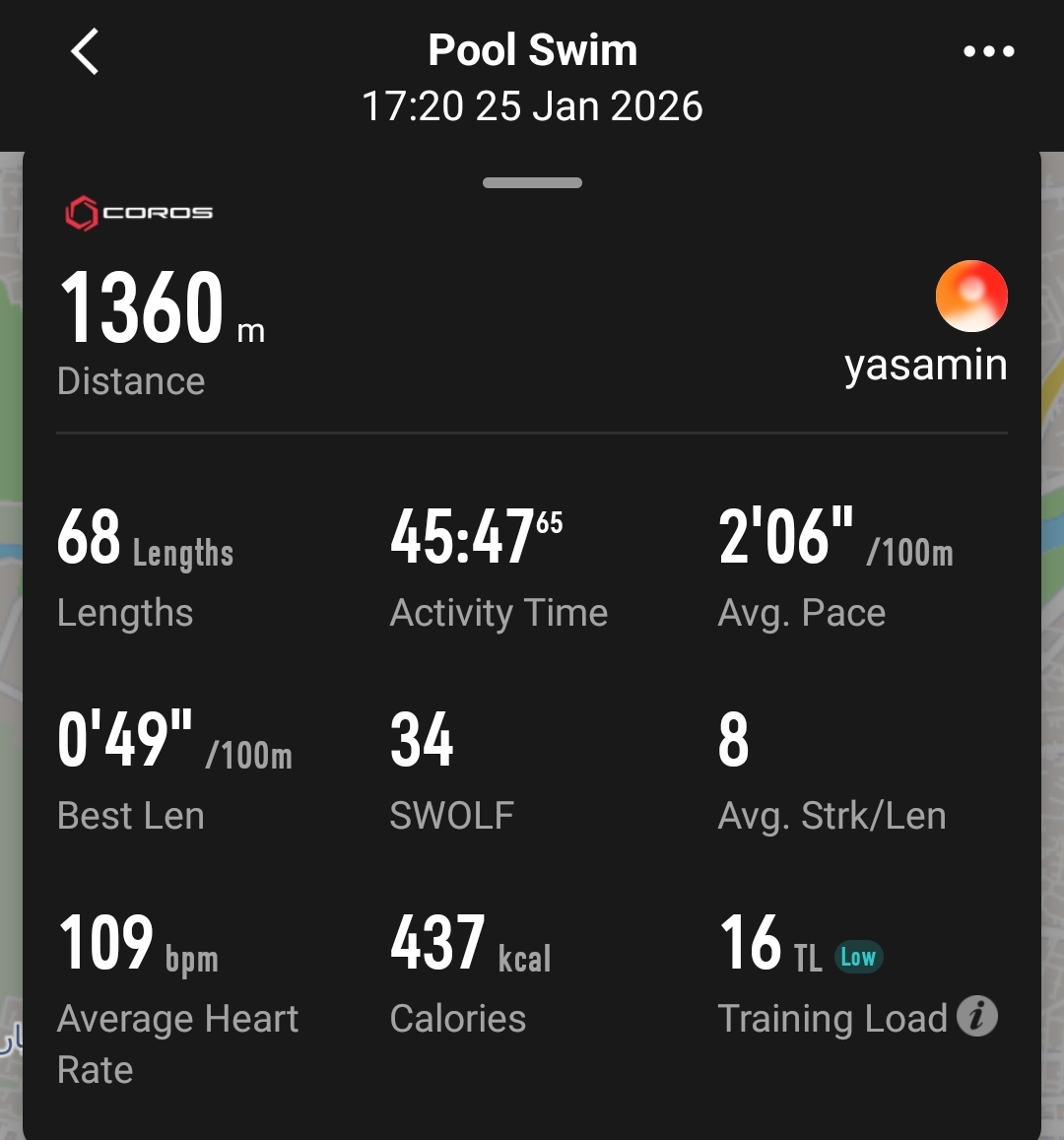
**You can see in the image below how the number of calories burned differs between 45 minutes of swimming and running — this is based on the data recorded on my own watch:
Which One Builds Better Lung Capacity?
This depends on what you mean by “better”:
- If you mean breath control and lung efficiency → Swimming wins
- If you mean endurance and oxygen usage → Running wins
Many people who switch from running to swimming say:
“Swimming feels harder at first — like I can’t breathe enough.”
That doesn’t mean their lungs are weak — it’s because swimming forces breath control in a completely different way: you can’t breathe whenever you want, and you must sync every breath with your stroke.
Similarly, many swimmers who try running for the first time report the opposite challenge. Swimmers like me believe that in water, you feel supported by it, but when I started to run, I had to carry my body instead of letting water help me, which made me so tired.
So:
- Runners often find swimming difficult at first because they’re not used to restricted breathing and the resistance of water.
- Swimmers often find running difficult at first because their body isn’t used to sustained weight-bearing impact and land rhythm.
Both activities challenge the lungs in their own way, which is why swimming vs running lung capacity is such an important consideration for cross-training.
Real-World Insight
From discussions among athletes and fitness communities:
- Runners transitioning to swimming often struggle with breathing timing
- Swimmers transitioning to running adapt faster to endurance
- Combining both leads to the best overall results
One common takeaway:
“Swimming trains how you breathe. Running trains how long you can keep going.”
Can You Combine Swimming and Running?
Weekly Swim & Run Routine Example
Monday – Swim: 1,000–1,500 meters, focusing on technique and breath control. Swim at a moderate pace, mixing freestyle and backstroke, and focus on smooth breathing every 3–5 strokes.
Tuesday – Tempo Run: 5 km structured run:
- 1 km at 6:30 min/km (easy warm-up)
- 1 km at 5:00 min/km (hard effort)
- 1 km at 6:00 min/km (recovery)
- 1 km at 5:10 min/km (hard effort)
- 1 km at 6:30 min/km (cool-down)
Wednesday – Swim: 1,200 meters intervals. Perform 4 × 200 m fast with 30 seconds rest, plus 4 × 100 m easy. Alternate strokes for variety. Focus on building lung power and speed.
Thursday – Trail / Endurance Run: 6–8 km at a moderate pace (~6:00–6:30 min/km) on uneven terrain or hills to strengthen legs and core.
Friday – Long Run: 8–10 km at a comfortable pace (~6:30–7:00 min/km) to build aerobic base and stamina.
Saturday – Long, Steady Swim: 1,500 meters continuous swimming at a moderate pace (~2–3 min/100 m), focusing on efficiency and endurance.
Sunday – Easy Recovery Run: 4–5 km at a light pace (~6:30–7:00 min/km) to loosen legs and maintain aerobic fitness.
FAQs:
Do swimmers have better lung capacity than runners?
Many swimmers say they feel they have “stronger lungs,” but runners often disagree.
Real takeaway:
- Swimmers = better breath control & underwater comfort
- Runners = better continuous breathing
Do swimmers or runners have higher VO₂ max?
Runners usually have higher VO₂ max because it’s nonstop cardio.
Real takeaway:
- Runners typically develop higher VO₂ max
- Swimming improves efficiency, not necessarily max oxygen output
Which is better for lungs, running or swimming?
Swimming trains your lungs in a way running never does — it forces control.
Running improves stamina, but swimming can help with breathing.
Real takeaway:
- Swimming → breathing control & lung strength
- Running → endurance & oxygen usage
Best results often come from combining both.
Swimming vs running lung capacity female
From a female perspective, you can see that:
Swimming helps them control their breathing and reduce anxiety.
Running helps them lose weight faster.
Many women also mention:
- Swimming feels harder at first due to breath timing
- Running feels more natural but less controlled
Real takeaway:
The difference isn’t gender — it’s adaptation:
- Swimming trains control
- Running trains endurance
How much swimming is equivalent to running 5K?
From real experiences:
- A 30-minute swim can feel like a 5K run, sometimes harder.
- Swimming 1,000–1,500 meters feels similar to running 5K for me.
- Swimming is harder per minute, but running is easier to sustain longer.
Real takeaway:
- ~25–40 minutes swimming ≈ 5K run effort
- ~1,000–1,500 meters swimming ≈ ,similar workout
But many beginners say:
“Swimming feels way harder — mostly because of breathing.”


Leave A Comment