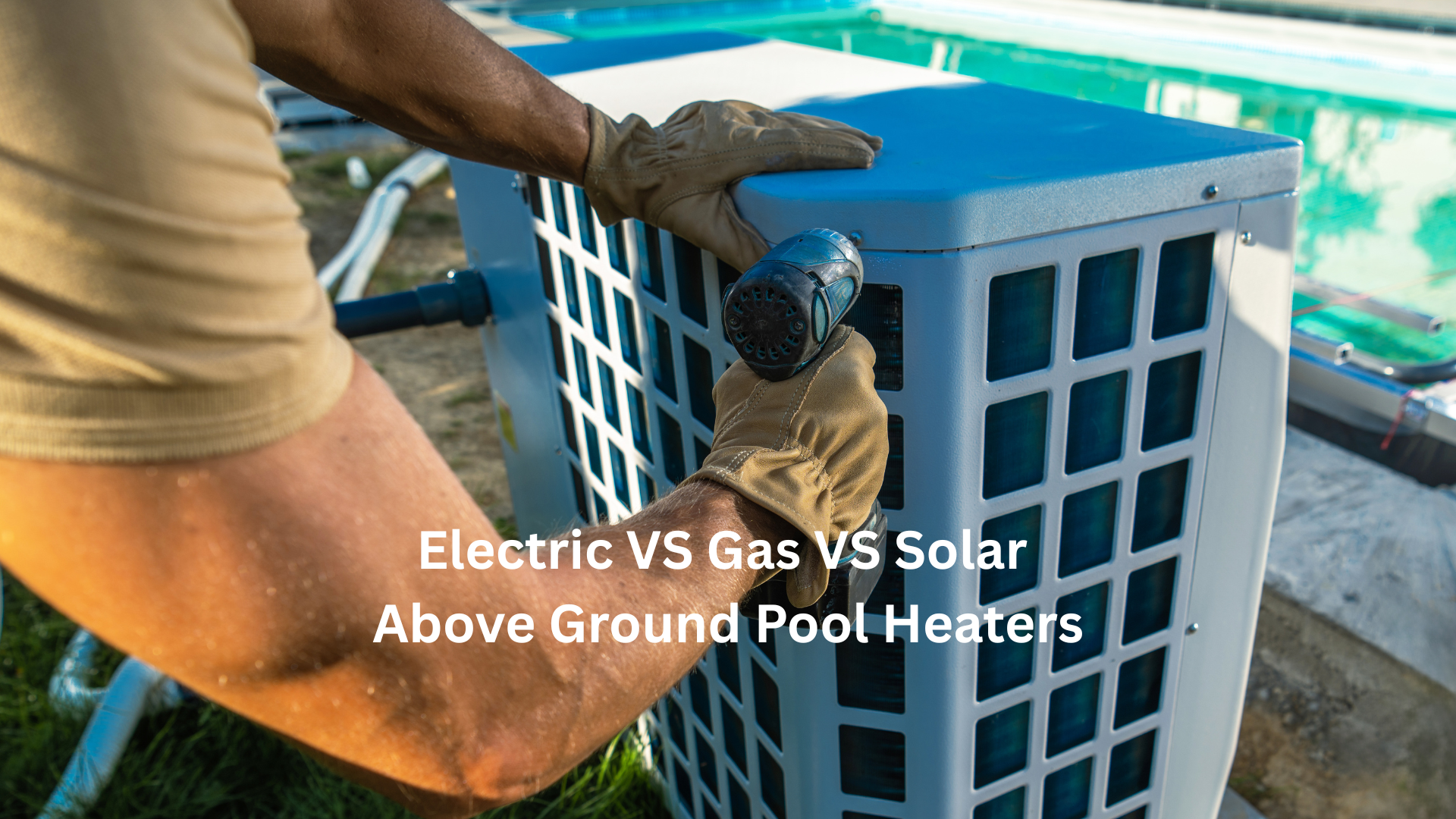
Key Differences between Electric vs Gas, and Solar Above Ground Pool Heaters
- electric swimming pool heat pumps that extract heat from the air for long-term energy savings,
- gas pool heaters that provide instant heat whenever you want, or
- Solar pool heaters that harness the free energy of the sun to warm your pool naturally.
Electric Swimming Pool Heat Pumps: Smart & Steady
Electric pool heat pumps are like nature’s vacuum cleaner, pulling heat from the air using a titanium heat exchanger for superior, rust-resistant performance. They are also champions in hot places higher than 50°F with a pool heater efficiency of 5-6 COP (coefficient of performance), which translates to 5 dollars of heat energy to every dollar spent on electricity!
- Heat transfer process: It takes the heat energy out of the surrounding air, intensifies it through a compressor, and spreads it out by passing it through coils of titanium heat exchangers. Likes the flow rate of water to be between 40 and 80 GPM, which provides equilibrium temperatures.
- Win in the energy efficiency pool: Savings up to 30-50 % of basic electricity in sunny states.
- Heating element performance: Accumulates gradually (3-5°F/day) and keeps the temperature constant, it is suitable for use over the weekend.
Prices: start-up costs of 2000-5000 US dollars.
Annual operating cost: $300-$800.
Pro: Silent, environmentally friendly in case the power grid is environmentally friendly.
Cons: Shuts down during cold seasons.
Quick Fire Powerhouses: Gas Pool Heaters
Gas pool heaters are like a camping party, propane or gas is lit up to power the pool heat system to warm the pool in a few hours, 1-3°F per hour, pool-ready in hours! Regardless of the weather, they pound away the chills all through the year.
- Thermal conductivity material: Copper or titanium heat exchanger coil for quick heat transfer with large rates of water flow (50-100 GPM).
- Pool heater efficiency: 80-95% thermal efficiency— it does not consume too much fuel as compared to the previous models.
- Synchronization of pool circulation pump: This is used together with your pool system to circulate the water in a turbo-charged way.
Cost to start: $1.5K-$4K.
Costs of operation: $1K+/year (propane is expensive).
Fun fact: The market size reaches $4.2B in 2025, and the CAGR is 5.4% until 2033, as the demand will increase to heat the pools quickly, ideal during a pool party or cold climates in the north, but cannot be considered eco-friendly.
Solar Swimming Pool Heaters: Free Sun Magic
The solar systems absorb the sun’s rays through black panels, and this process warms water naturally, thus no expenditure on fuel after installation. It is used in sunny areas; it increases the swimming season by 2-3 months.
- Mechanism of heat transfer: Panels receive the sun rays, and warm water is moved by the pool circulation pump—easy, it does not need coils.
- Superstar energy efficiency pool: Reduces expenses by 70% per annum.
- Heater efficiency in the pool: on sunny days, the efficiency reaches 50-70%; the water is deflected automatically on cloudy days.
Cost: $3K-$6K (roof usage crucial).
Operation fee: below $100/year (pump usage).
Longevity: 20+ years.
Disadvantage: Slow start (days to heat), nil at night.
Best Pool Heating Ideas Most Homeowners Forgot
Small changes add up to a lot:
- Use a pool cover — will conserve 30-50 % of heat.
- Calculate the size of your heater — 80,000 BTU heaters are needed to heat 15,000 gallons.
- Move water through — A proper pump flow rate will increase the circulation of heat.
- Use intelligent technology — Pool heaters can have WiFi so that temperatures can be controlled remotely.
- Combine two or more systems — Solar power and electric heat pumps are the best to use.
Head-to-Head Showdown
| Feature | Electric Heat Pumps | Gas Heaters | Solar |
|---|---|---|---|
| Speed | Slow (3-5°F/day) | Fast (1-3°F/hr) | Slow (sun-dependent) |
| Efficiency | High COP 5+ in warm air | 80-95% thermal | 50-70%, free fuel |
| Cost Upfront | $2K-$5K | $1.5K-$4K | $3K-$6K |
| Yearly Bills | $300-$800 | $1K+ | <$100 |
| Best Climate | Mild (50°F+) | Any | Sunny |
| Eco Impact | Good (air-source) | Higher emissions | Best (zero) |
| Lifespan | 10-15 years | 5-10 years | 20+ years |
Pick Your Pool Party Hero
Climate is the determining factor: hot and sunny to the south? Solar or electric pool heat pumps are your best bet. Cold in the north? Cold weather will never beat out gas pools. Adjust the rate of water flow to your system: 15K-gallon pools need 80K BTU heaters to perform fast!
- Wise scaling: BTU/volume ratio does away with slow warming.
- Boosters: Covers of pools save 30-50% of heat.
- Tech advantages: WiFi-enabled controls on contemporary swimming pool heat pumps allow you to adjust temperatures using your smartphone.
Check the water flow rate, size of the pool, and your energy bill in your locality to get the ideal pool heating system for your backyard.
Splash Into Smart Choices
Your final pool heating solution is in—electric, to save money all the time and avoid noisy nights; gas, to heat up your partying like it was overnight; or solar, to have sinless sunny fun. The energy efficiency pools are offering up to 70% savings and the markets are expanding at 5% a year, so it is time to make the splash.
Get the proper swimming pool heater pump, install a pool cover, and turn chilly swims into unforgettable adventures. Make the dip with confidence—who will start your next backyard party? It is time to start your ideal splash!


Leave A Comment